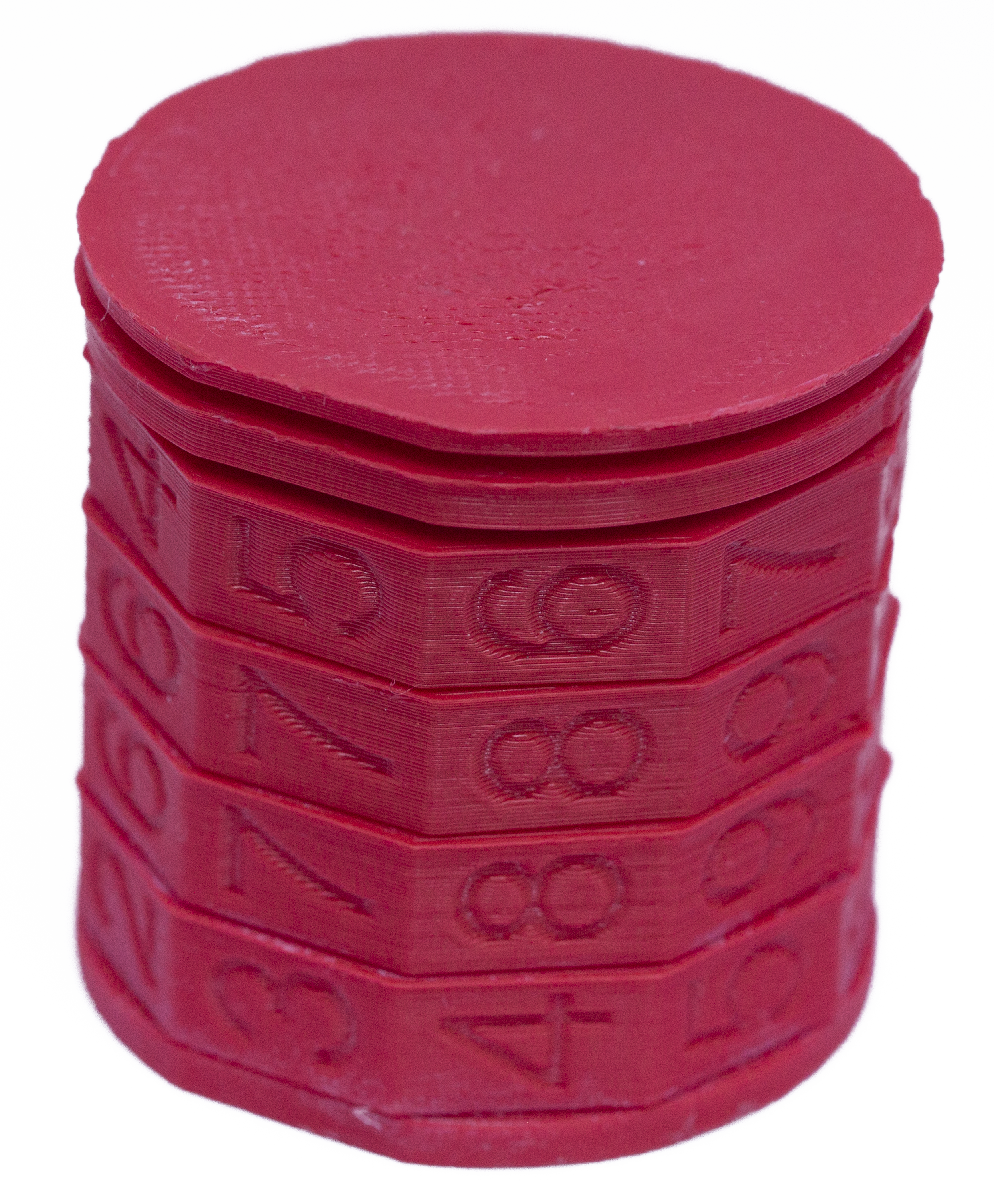
Description
Locks have always been interesting to me. They are often surprisingly simple mechanisms that are used everywhere in the world. Today, locks may be made out of stronger materials or be more precisely machined, but the base mechanisms have been in use for centuries.
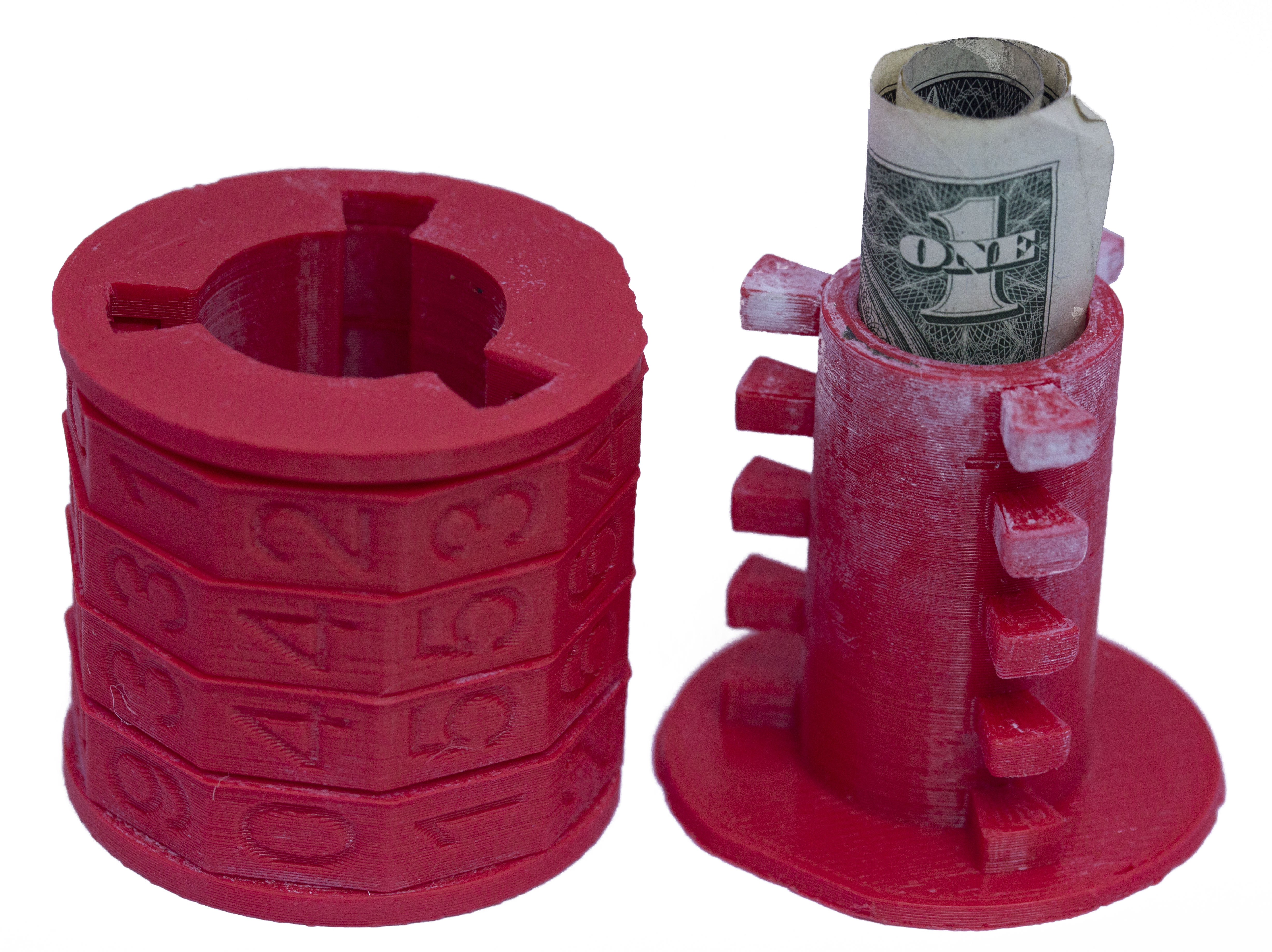
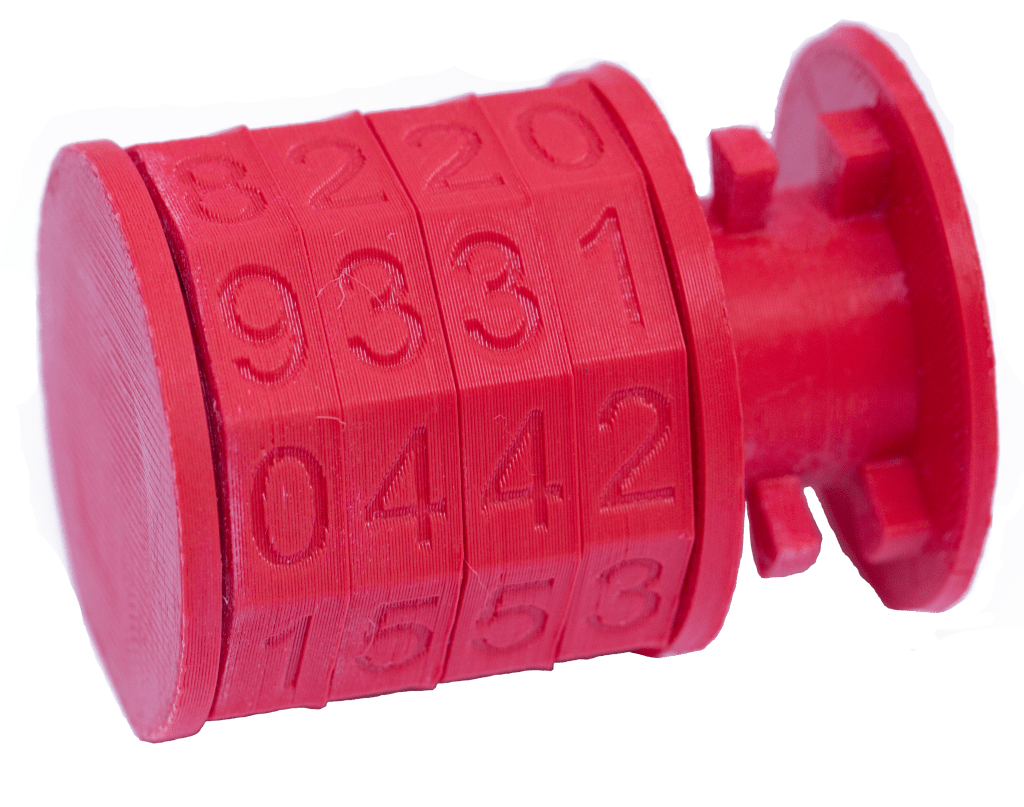
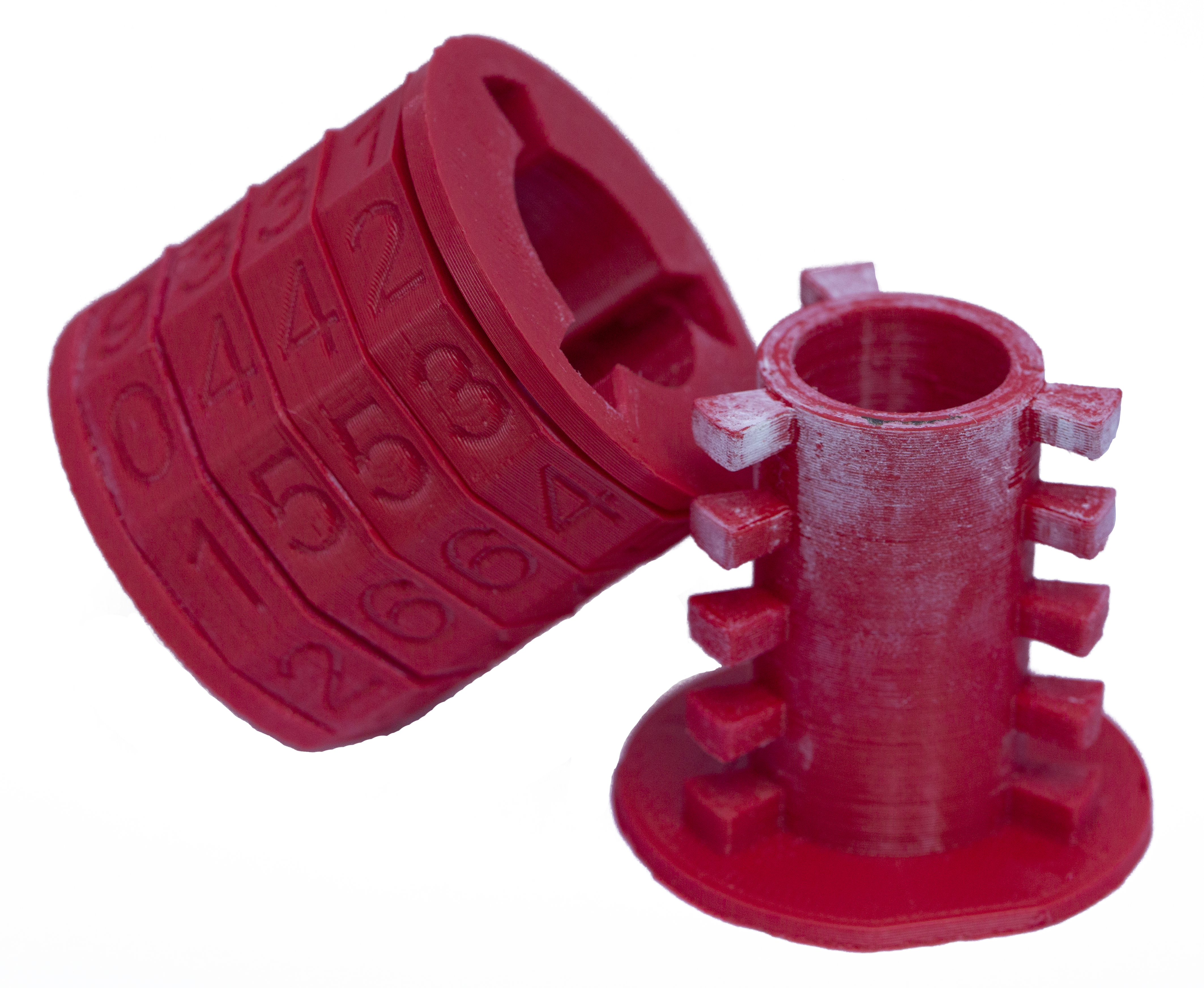
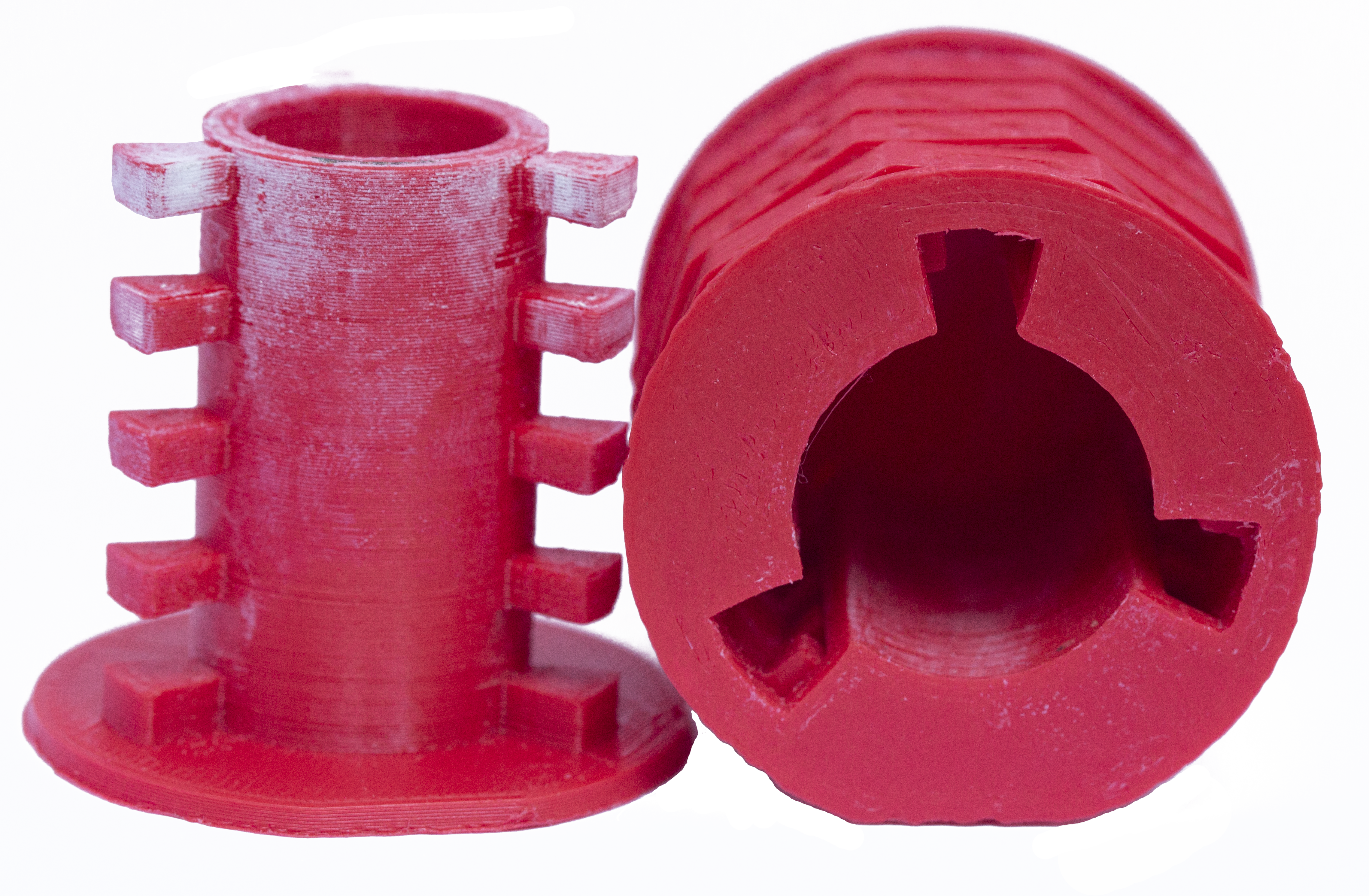
A dial lock is one of the most common types of locks. They can be very compact and they don’t require the use of a key; they are unlocked with a code memorized by the owner. When the owner enters the correct combination, the dials are positioned so that cuts on the interiors of the disks align. In this configuration, a cylinder stretching through the center of all the disk is able to move. There are teeth protruding from this inner cylinder that fit through the aligned cuts of the dials. The movement of the inner cylinder is then used to allow the lock to open. This motion commonly unlocks a shackle, but in my design it allows the inner core to slide fully out to reveal an internal compartment.
I originally attempted to create this model a year before the project shown. I made a functioning design then, but it was small and fragile. Some of that fragility came from the small pieces, and some came from the weaker glue joints required in that initial model. In the newer model, the pieces are strengthened in key locations and are designed such that the single glued joint has a large amount of surface area. This vast increase in surface area allows for a strong joint. I can now hide a stack of coins or a secret note securely!
 Sean Cavalieri